
The laser treatments market in the UAE is large and varied in quality. High-end clinics and unregulated beauty centres both advertise laser hair removal and tattoo removal, often at similar price points, but with dramatically different equipment, protocols, and clinical oversight. Understanding what separates a safe, effective laser treatment from a potentially harmful one matters especially in Ajman's population, where the majority of skin tones fall in the medium to dark range on the Fitzpatrick scale — the range where improper laser use carries the greatest risk of burns, hyperpigmentation, and scarring.
At Al Jurf Medical Center in Ajman, our laser treatments are performed or directly supervised by trained clinicians using FDA-cleared systems appropriate for the full range of skin tones we serve. Every treatment begins with a consultation and patch test. This is non-negotiable, and it is why our complication rate is exceptionally low.
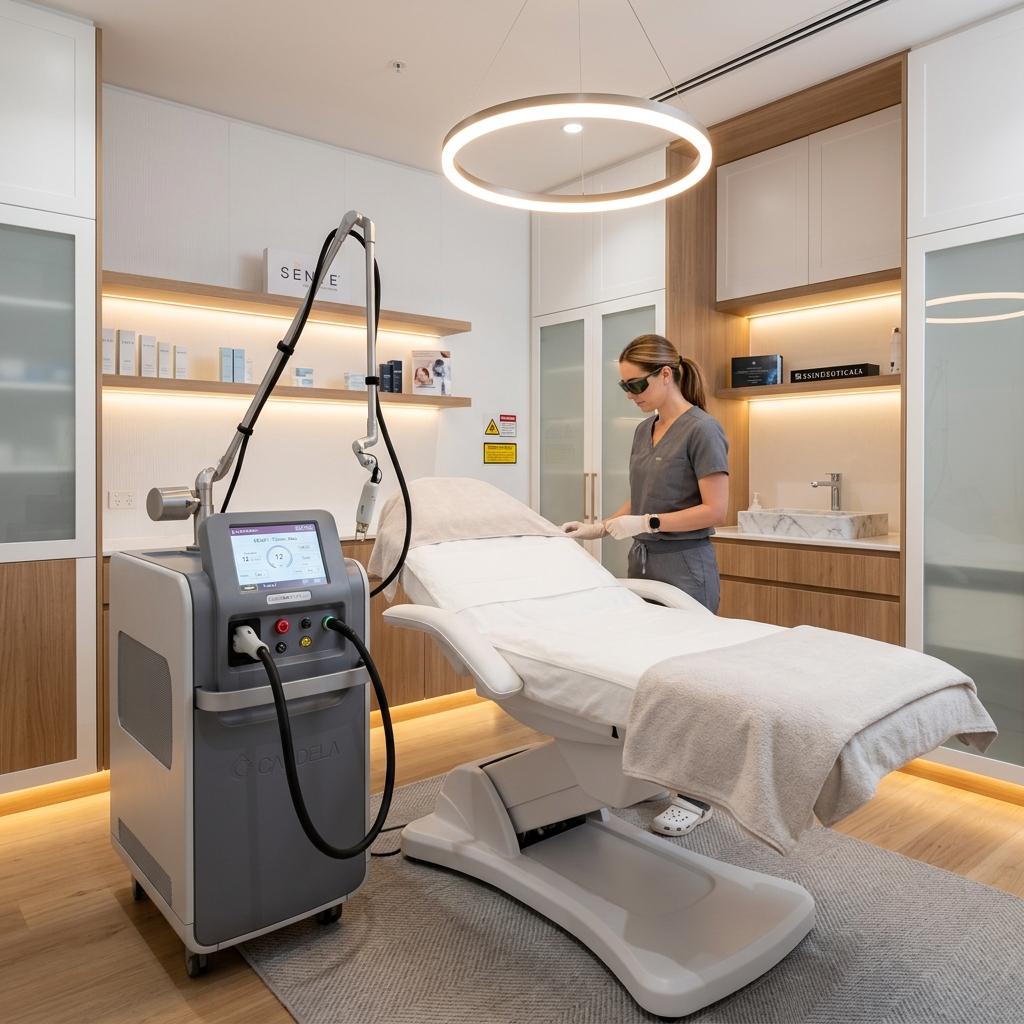
Laser hair removal works by selectively targeting the melanin pigment in the hair follicle with concentrated light energy. The energy is absorbed by the follicle, converted to heat, and this heat damages the follicle's ability to regenerate hair. Because the target is melanin in the follicle, the surrounding skin is largely unaffected when the correct laser parameters are used.
Hair grows in three phases: anagen (active growth), catagen (transition), and telogen (resting). Laser energy is only effective on follicles in the active anagen phase, when the follicle is fully formed and connected to the melanin-containing hair shaft. At any given time, approximately 20 to 30 percent of follicles in a treatment area are in this phase. This is why laser hair removal requires a series of sessions rather than a single treatment — to progressively address follicles as they cycle into the anagen phase.
Most patients achieve 80 to 90 percent permanent hair reduction after six to eight sessions. Sessions are spaced four to eight weeks apart depending on the treatment area, with facial hair requiring closer intervals than body hair. Fine, vellus hair and very light hair contain less melanin and are harder to target effectively — your clinician will advise on expected outcomes for your specific hair type.
Shave the treatment area 24 hours before your session. Avoid waxing, threading, or epilating for four weeks before treatment, as these remove the follicle that the laser needs to target. Avoid sun exposure and use SPF 50 on the area for two weeks before and after each session. Avoid heat exposure including saunas and hot baths for 48 hours post-treatment.
Tattoo ink sits in the dermis, placed there by a needle that deposits pigment particles too large for the immune system's macrophage cells to engulf and remove. Laser tattoo removal uses extremely short, high-energy pulses of light to shatter these ink particles into fragments small enough for the immune system to clear away through the lymphatic system over the following weeks.
Modern picosecond lasers deliver energy in trillionths of a second, generating a photoacoustic shockwave effect that fragments ink particles more efficiently and with less heat than the older nanosecond Q-switched systems. This translates to faster clearance in fewer sessions and a lower risk of thermal side effects.
Most tattoos require six to twelve sessions for significant fading. Complete removal is achievable for many tattoos, particularly older, dark-ink work. Your clinician will assess your tattoo at consultation and give you a realistic estimate for both number of sessions and likely outcome.
Most patients describe the sensation as comparable to having the tattoo applied — a series of sharp snapping sensations. Numbing cream significantly reduces discomfort. Post-treatment, the area typically looks white immediately after each pulse, then develops redness that resembles mild sunburn for one to two days.
The single most important factor in safe laser treatment in Ajman is selecting the right laser system and settings for your skin tone. Our clinicians are trained in Fitzpatrick skin type assessment and adjust every treatment parameter accordingly.
Laser safety for darker skin tones requires using wavelengths that are absorbed less by the melanin in the surrounding skin (typically Nd:YAG 1064nm for hair removal) and extended pulse durations that allow heat to dissipate from the skin surface while still being destructive at the follicle level. When these adjustments are not made correctly, post-inflammatory hyperpigmentation, burns, and in severe cases permanent skin changes can result.
Every new patient at Al Jurf Medical Center undergoes a mandatory patch test before any full treatment begins. We assess your skin's response to the laser at the intended parameters and adjust as necessary before proceeding with the full treatment area.
Our non-negotiable protocol protects darker skin tones from risks of hyperpigmentation and thermal damage through targeted wavelengths and patch testing.
Ready for permanent hair reduction or tattoo clearance? Schedule your consultation and mandatory laser patch test with our experienced clinical team today.
Contact our reception team to confirm your insurance details and book your laser consultation.
Book AppointmentFind answers to common questions about laser hair removal and picosecond tattoo clearance.
Laser hair removal produces permanent reduction in the treated follicles. Most patients achieve 80 to 90 percent permanent reduction. Fine or light hair may regrow partially over time and benefit from occasional maintenance sessions.
Laser hair removal is not recommended during pregnancy. We advise completing treatment before conception or waiting until after delivery and the cessation of breastfeeding.
Yes. We use appropriate laser systems for all skin tones. A consultation and patch test determine the safest and most effective parameters for your specific tone.
This varies considerably with tattoo size. Small tattoos may take under 10 minutes per session. Large pieces covering a significant body area may take 30 to 45 minutes. Sessions are spaced six to eight weeks apart.
Most body areas can be treated. Laser hair removal is not performed directly over the eyebrows due to proximity to the eyes, and certain areas near the genital region require specific protocols. Your clinician will discuss any applicable limitations at your consultation.