
A missing tooth is not just an aesthetic problem. Within weeks of losing a tooth, the jawbone underneath begins to shrink because the stimulation that kept it dense and healthy is gone. Over months and years, this bone loss alters the shape of your face, causes adjacent teeth to drift, creates bite imbalances, and complicates any future restoration work. Dental implants are the only tooth replacement option that solves this at the root level, literally.
A dental implant is a titanium post that is placed into the jawbone and integrates with it over time, functioning exactly as a natural tooth root would. On top of this, a custom-made crown, bridge, or prosthesis is placed, producing a result that is indistinguishable from a natural tooth in both appearance and function. At Al Jurf Medical Center in Ajman, our implantologists use internationally certified implant systems and follow strict protocols to deliver predictable, lasting results.
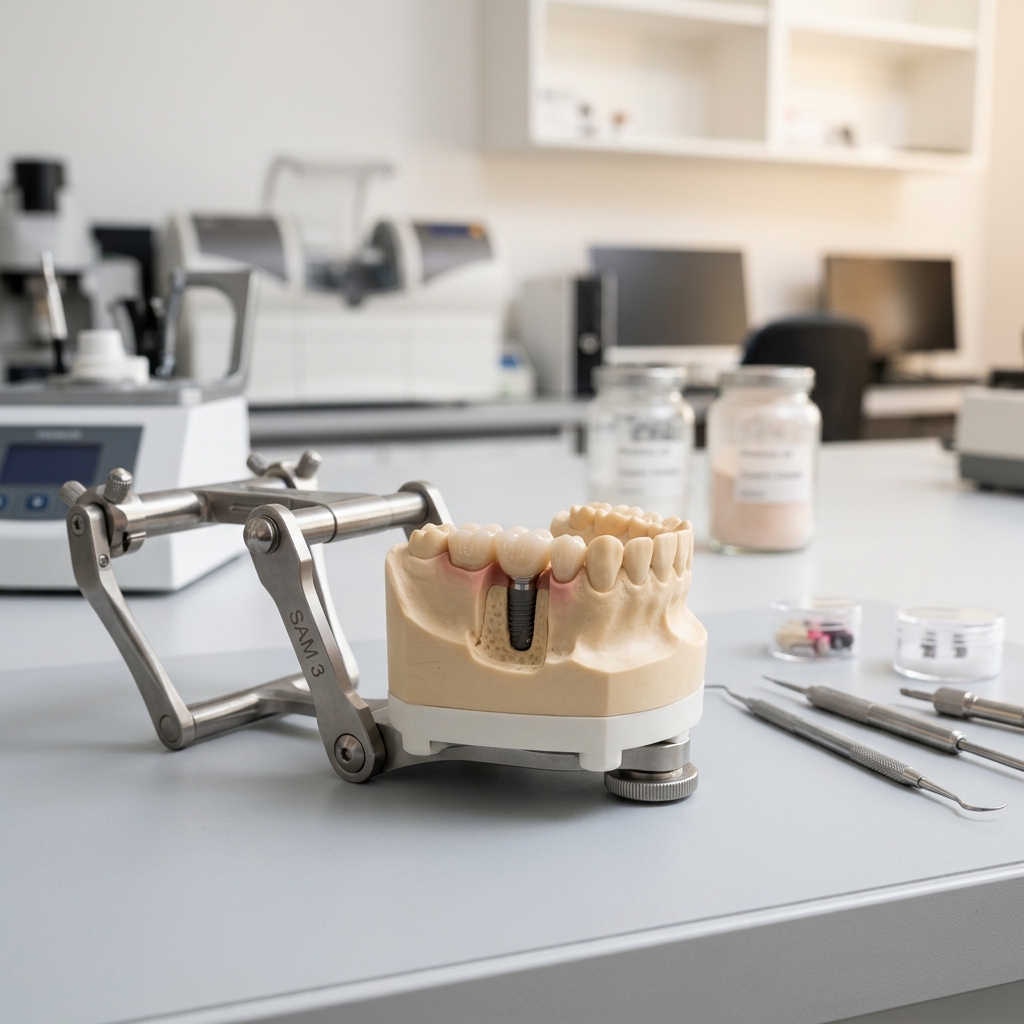
The key to the dental implant's success is a biological process called osseointegration, first documented in the 1950s by Swedish orthopaedic surgeon Per-Ingvar Branemark. When a titanium implant is placed into the jawbone, the bone cells recognise the titanium surface as compatible and gradually grow onto and around it over the following eight to sixteen weeks. The implant becomes structurally integrated into the jaw, providing a stable, load-bearing anchor for the final restoration.
The crown attached to the implant is fabricated from high-strength ceramic and custom-matched to the colour, shape, and size of your surrounding natural teeth. Once in place, there is no visual distinction between an implant crown and a natural tooth.
A natural biological fusion process where bone cells grow directly onto the titanium implant surface, securing it permanently as a load-bearing foundation for your new teeth.
If your bone has reduced since losing the tooth — which is common when a tooth has been missing for more than a year — bone grafting may be recommended before implant placement. This is a routine procedure with a high success rate and does not preclude you from treatment.
The majority of adults with one or more missing teeth are suitable candidates. The assessment process at Al Jurf Medical Center evaluates the following:
We provide tailormade implant solutions depending on your unique clinical requirements.
One implant, one abutment, one crown. The most common implant procedure and the most straightforward restoration. Unlike a dental bridge, a single implant does not require the adjacent healthy teeth to be cut down. It is entirely self-supporting and preserves the surrounding tooth structure completely.
When several teeth are missing in different locations, individual implants are placed at each site. This is the most conservative approach as it preserves maximum bone and provides independent support at each location.
Where three or more consecutive teeth are missing, two implants can support a ceramic bridge spanning the gap. This reduces the number of surgical placements needed while still providing the bone stimulation and stability that no conventional bridge can offer.
For patients who have lost most or all of their teeth, four to six strategically placed implants can support a complete fixed arch of teeth. This procedure permanently eliminates the need for removable dentures, restoring function, confidence, and facial structure in a way that no other treatment matches.
We take a phased, thoroughly planned approach to implant treatment. Here is what the journey typically looks like:
Clinical examination, digital X-ray, and where appropriate, a 3D CBCT scan. Discussion of options, timeline, and costs.
A detailed 3D surgical plan is produced showing exact implant positioning before any surgery takes place.
Extraction of failing teeth and bone grafting if required, completed and healed before implant placement.
A minor surgical procedure performed under local anaesthesia. Duration is typically 45 to 90 minutes per implant site.
8 to 16 weeks of osseointegration before final loading. A temporary restoration may be provided during this phase.
Impressions or digital scans are taken and the custom crown, bridge, or arch is fitted and refined for a perfect bite.
Dental implants have the best long-term track record of any tooth replacement option. Studies consistently show success rates above 95% at 10 years, and many implants remain functional and healthy at 25 years and beyond. The key factors in long-term success are good oral hygiene, regular dental check-ups, and avoidance of heavy smoking.
Implant maintenance is no different from natural tooth care. Brush twice daily, clean around the implant crown with floss or an interdental brush, and attend your regular six-monthly check-ups. There are no dietary restrictions associated with implants once they are fully integrated.
Contact us and we will give you a clear scheduling picture for your specific case. Free assessment available.
Book AppointmentEverything you need to know about dental implants at Al Jurf Medical Center.
Implant costs depend on the number of implants, whether bone grafting is required, and the type of final restoration. We provide a full, itemised cost plan at your consultation so you know exactly what is involved before committing.
The procedure is performed under local anaesthesia and most patients report significantly less discomfort than they expected. Mild soreness and swelling for two to three days post-surgery are normal and managed with standard pain relief.
A straightforward single implant from placement to final crown typically takes four to six months. Cases requiring bone grafting or multiple implants may take longer. We map out the full timeline at your consultation.
Implant failure is uncommon but can occur, most often in the early healing period. Risk factors include smoking, uncontrolled diabetes, and insufficient bone density. Our thorough pre-surgical assessment is designed to identify and address these factors before placement.
We endeavour to schedule consultations within a few days of your inquiry. Surgical slots are booked based on the treatment plan timeline. Contact us and we will give you a clear scheduling picture for your specific case.