
If you are dealing with persistent acne, you have almost certainly already tried things. The cleansers, the spot treatments, the celebrity-endorsed skincare systems, the recommendations from well-meaning friends. You may have had some improvement for a while before the acne came back. Or you may have seen no improvement at all. Either way, you are here because the over-the-counter approach has reached its limit.
The reason most self-managed acne treatment fails is not that the person is not trying hard enough. It is that they are treating the surface symptom without addressing the underlying mechanism driving it. Acne is a disease process involving sebum production, skin cell turnover, bacterial activity, and inflammation, all of which are influenced by hormones, genetics, and immune responses. Products applied to the skin can only address one or two of these factors in isolation and at low potency. Effective acne management requires a clinical assessment that identifies which factors are dominant in your specific case.
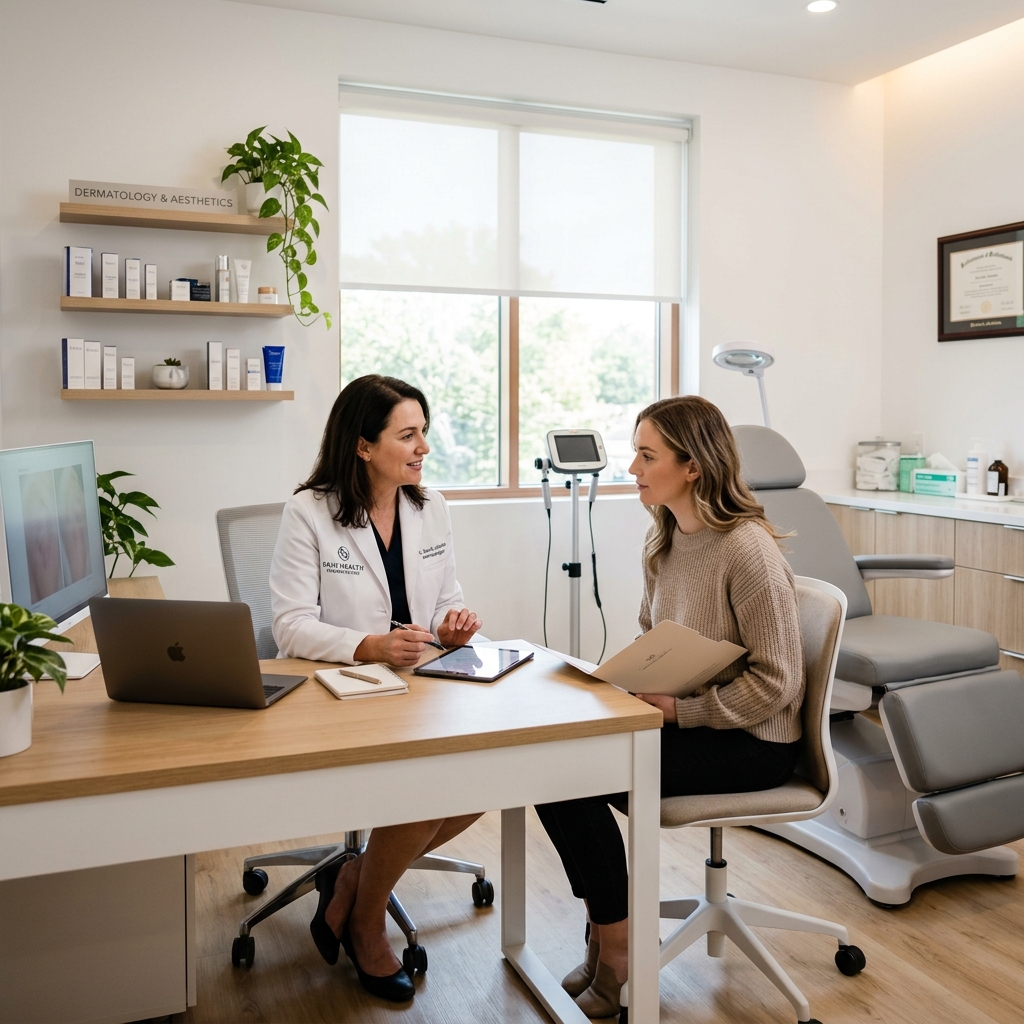
At Al Jurf Medical Center in Ajman, our dermatologists approach acne the way it deserves: as a medical condition with multiple potential drivers, requiring an individually designed treatment plan.
Acne is not a single uniform condition. The type of acne you have determines which treatments will and will not work for you.
Blackheads and closed comedones (whiteheads) caused by follicle blockage with sebum and dead skin cells. Primarily a pore-clogging and cell turnover issue. Responds well to retinoids, salicylic acid, and regular professional extractions.
Red, raised papules and painful pustules that form when a blocked follicle becomes infected with Cutibacterium acnes bacteria. The inflammatory response is what causes the redness, heat, and discomfort. Responds to topical and oral antibiotics, benzoyl peroxide, and anti-inflammatory treatments.
Deep, solid, painful nodules and fluid-filled cysts beneath the skin surface that do not come to a head. These are the most severe form of acne and carry the highest risk of permanent scarring. Topical treatments alone are insufficient. Systemic treatment — typically oral isotretinoin — is often the most effective intervention for cystic acne.
Characterised by breakouts concentrated along the lower face, jawline, and chin, often with a cyclical pattern tied to the menstrual cycle. Driven by androgen stimulation of sebaceous glands. Responds particularly well to hormonal management approaches including combined oral contraceptives and anti-androgen medications.
Triggered or worsened by friction, pressure, or occlusion. In Ajman, this is a significant contributor given the prevalence of mask-wearing, hijab, and helmets for motorcyclists. Management requires both treatment of active lesions and modification of the physical triggers.
Understanding your personal acne triggers is a key part of the management strategy we build at Al Jurf Medical Center. Common contributing factors include:
Acne is a complex inflammatory cycle. Self-managing breakouts often misses deeper dermal triggers. Medical intervention targets the underlying biology to clear active lesions and reduce future scarring risks.
We provide clinically-proven therapies tailored specifically to address your skin's condition, acne severity, and recovery journey.
Retinoids (tretinoin, adapalene) normalise skin cell turnover and prevent follicle blockage. They are the most effective topical category for acne and have the strongest evidence base. Topical antibiotics, benzoyl peroxide, and azelaic acid are prescribed in combinations tailored to your acne type and skin tolerance.
Oral antibiotics including doxycycline and lymecycline reduce bacterial load and inflammation, producing faster results than topicals alone for moderate to severe inflammatory acne. Combined oral contraceptives and spironolactone address the hormonal component in female patients. Isotretinoin (known commercially as Roaccutane) is a highly effective systemic retinoid for severe, scarring, or treatment-resistant acne, prescribed under close medical supervision with regular monitoring.
Salicylic acid peels specifically target the sebum-filled follicle, making them particularly effective for oily, comedonal acne. Glycolic acid peels address cell turnover and post-inflammatory pigmentation. A course of four to six peels spaced three to four weeks apart can produce a significant reduction in both active acne and the marks left behind.
For painful, stubborn nodular or cystic lesions that are slow to resolve, a small injection of dilute corticosteroid directly into the lesion can dramatically accelerate resolution — often within 24 to 48 hours. This is not a routine treatment but an option for selected lesions when appropriate.
Once active acne is under control, the marks and scars that remain are addressed separately. Depending on the type of scarring, treatment options include microneedling, RF microneedling, chemical peels, laser resurfacing, subcision, and dermal filler for deep atrophic scars. Post-inflammatory hyperpigmentation (the flat dark marks) is managed with topical brightening agents and chemical peels.
Acne treatment requires patience. Most topical regimens take six to twelve weeks to produce a visible difference, and it is common for skin to appear temporarily worse in the first two to four weeks as the treatment accelerates cell turnover. Patients who give up during this purge phase miss the results that would have come with continued use.
Having a dermatologist guide you through this process means adjustments are made based on how your skin is actually responding, not guesswork. If a topical is causing too much dryness, the concentration is adjusted. If the initial approach is not producing sufficient improvement after eight weeks, the plan is escalated. This iterative, supervised approach is why medically managed acne treatment produces outcomes that self-managed treatment rarely achieves.
6 to 12 Weeks: The typical window required for clinical skincare regimens to yield visible improvements. Dedication is key during initial adjustment weeks.
Book a consultation with our experienced clinical dermatologists. We will evaluate your skin type, identify primary acne drivers, and build a tailored treatment plan designed to clear your skin and prevent future scarring.
Contact our reception team to confirm appointment availability and doctor schedules.
Book AppointmentFind answers to common questions about clinical acne treatments and skincare management.
For patients with dietary triggers, reducing high-GI foods and dairy can produce meaningful improvements in acne severity. However, diet alone rarely eliminates established acne. It is a supportive measure alongside appropriate medical treatment.
Isotretinoin is a highly effective treatment with a well-characterised side effect profile. It requires regular blood monitoring and carries specific precautions for women of childbearing age. Your dermatologist will discuss everything in detail before prescribing.
Yes. Non-comedogenic, mineral-based makeup formulations are generally safe to use during acne treatment. Your dermatologist can advise on specific products that will not counteract your treatment.
Post-inflammatory hyperpigmentation (flat dark marks) often fades over six to twelve months with sun protection. True atrophic scars — pits and texture changes — do not resolve without treatment. The sooner acne is effectively controlled, the less scarring develops.
Yes. Teenage acne is one of the most common presentations we see. Our dermatologists are experienced in treating adolescents and adapt communication and treatment approaches appropriately for younger patients.